Krishna Somashekar

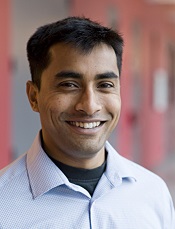
I am an industrial design and development consultant for products that are typically electronic accessories. I help individuals and organisations who own intellectual property in their effort to building products. What I bring to this effort include: knowledge of materials, manufacturing processes, embedded electronics, embedded software and industrial design. I get involved from the initial conceptualisation of a product up until the finished product rolls out of an assembly line.

During my CFL experience I had a lot of catching up to do because of my learning disabilities. I of course also faced many hurdles and challenges that one encounters when growing up. But I always had the feeling that I belonged to a very responsible community and I accepted most of the responsibilities that came along with it.

Looking back at my CFL experience, I consider myself very fortunate to have grown up in CFL. The school is probably responsible for making me take up a lot of ownership and pride in what I do. Ownership, pride, thoroughness and some good fortune seem to be the fundamentals for a job well done. In short CFL worked out well for me.

Shabari Rao

Has it been 20 years since I graduated from CFL?

Yes, it has.

And just like a good pickle, my experiences as a student there have soaked right into who I am and it’s difficult to separate the mango from the spices!

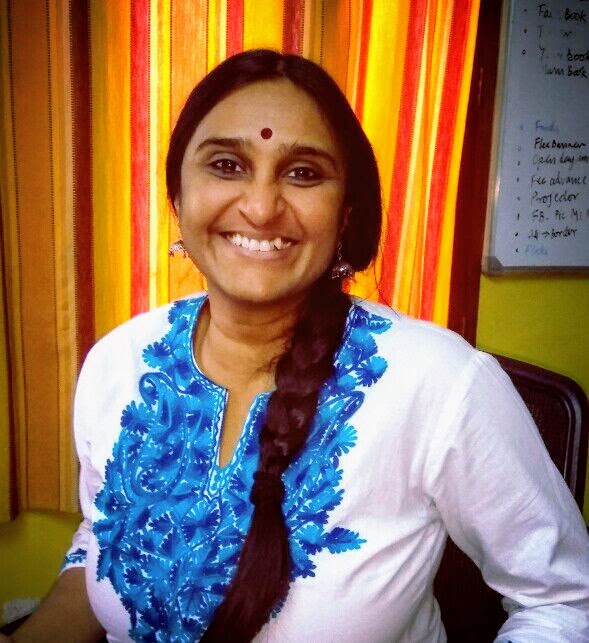
At this stage of my life, I think of myself primarily as a researcher: my work is driven by questions and curiosities. I am interested in the potential and role of the body in learning, in knowledge production, and as a site of knowing. The theoretical structures that my work is grounded in are theories of performance, embodiment, education and phenomenology. Performance is the medium or language of my work. Education and performance are the contexts in which I work. And sometimes, I write.

My interests, in some measure, have been shaped by the questions and experiences that CFL provided. Questions around identity and self; experiences rooted in the body and art.

The ability to resist defining my work through easy categories comes, at least in part, from being comfortable with uncertainty, being able to question the ‘way things are’, and having trust that it makes sense somehow: all qualities that are embodied by the project undertaken by the CFL community.

And yet, CFL is not a constant. It has changed and evolved a lot over the years, as any dynamic entity will. CFL now is not what it was in the 1990s and neither is the world! Still, my experiences and memories as one of the first students of the school are precious to me, and shape me in ways that are revealed to me in different aspects and stages of my life.

Nikhil Fernandes

After I left CFL, I attended Colgate University, a liberal arts college in New York state. I received a BA in Physics, with a minor in Applied Mathematics, and graduated in 2008. While at Colgate, I did research on laser optics and superconductor physics, and I volunteered with Habitat for Humanity, an organization that builds houses for low- income families and helps rebuild after natural disasters. After Colgate, I joined Cornell University for a PhD in Applied Physics, and I study novel nanocomposite materials with a view towards alternative (solar and geothermal) energy applications, a field I hope to eventually work in.

CFL has been such a large part of my life, both at home and at school, that it’s hard to separate its impact on my life from everything else. I do think that CFL has given me the ability to introspect, the gift of emotional detachment, and the curse of having to say “Nothing, really” when asked what I’m thinking about when I become quiet.

Looking back with a few years of distance, perhaps the single most important thing I’ve taken away from CFL is not a lesson I learned at school, but the example set by the people who gave up their time, and in many cases otherwise lucrative careers, to fill a need they saw. Of all the things about CFL that may have changed the direction of my life, that may well prove to be the most significant.

Arjun Jayadev

I am a Professor of Economics at Azim Premji University. I was an Associate Professor of Economics at the University of Massachusetts, Boston before that. I was a post-doc at Columbia University and received my PhD from the University of Massachusetts Amherst.

I was one of the first batch of A-level students at CFL. It was a wonderful few years, partly because the school was finding its feet at that time and things were gloriously unstructured. I very much felt like part of the adventure that the teachers had undertaken. The relationships that I built with my classmates and my teachers were and are among the most special in my life.

CFL was much more than a school. It was (and is) a vibrant community of people who had the courage to break away from the imperatives of society and in doing so gave everyone— students and teachers alike—the chance to explore deeply together some of the most compelling questions that arise in life in a happy and caring environment. Even if I was not aware of it at the time, this was an extraordinary gift.

For most people, school prepares you at best for a career. For me, CFL provided me with the confidence to explore my interests outside that box. More crucially, the questions which were asked in CFL about life and relationship militate against glib answers. They are things which I carry about with me unconsciously.

A full quarter century has passed since I left CFL. I find that age doesn’t necessarily bring wisdom. The world continues in its ways and I in mine, all the time looking for more clarity on the questions of how best to live this life.The questions remain, even if unanswered.

Minti Jain

I completed my Masters in Environmental Conservation Management, after which I assisted a few projects at Ashoka Trust for Research in Ecology and Environment, Bangalore. I later joined Down to Earth Magazine, a wing of Centre for Science and Environment, New Delhi. I worked there as senior reporter, which entailed traveling to different states in India and reporting on urban issues. At present I’m working for Saahas, where we do waste management across Bangalore.

During my school years, I was described as a very quiet and shy person. I did however, have a part within that was burst- ing to express itself, but something held me back. Perhaps it was fear of being anything less than perfect. But I also had the determination to overcome all my fears, however big or small. The atmosphere at CFL certainly assisted me to grow on this path.

At CFL I was encouraged to be myself and discover what that is rather than ‘become’ something. There was a lot of space and opportunity for this to happen. Apart from many extracurricular activities, we were exposed to a range of work environments and societal situations that broadened our horizons. Even the academics were taught in a way that encouraged a lot of self-learning and minimized peer comparison or pressure from teachers to produce any pre-determined results. At the same time one’s limits were pushed equally in every direction, whether it was mathematics, sports, helping with the daily chores of sweeping and mopping or regarding each one’s behavior toward the other… nothing was neglected. We had scheduled class time when we were left to do no activity but just sit and observe what was happening around and inside. And there were sessions when we had to share our observations, feelings, thoughts, problems; this really helped to look closely within and at one’s behavioral tendencies.School meant a space where learning took place for both students and teachers. There was no punishment for any ‘wrong’ doing. I found it very clever of the teachers to make the students themselves feel responsible for what they did. This was much more effective in producing corrective action and in later years to be able to make one’s own decisions with some clarity. This also gives very little space for blaming anyone else for one’s action.

Deviah Aiama

I am currently a programme officer with the International Union for Conservation of Nature (IUCN), an inter-governmental and civil society organisation that finds pragmatic solutions to global conservation and development challenges. I work on advising bioenergy policy and project developments to include appropriate measures that protect biodiversity, value ecosystem services, and improve access to sustainable energy equitably. Prior to this, I worked as a policy analyst for the Government of Canada (Department of Natural Resources) on climate change, renewable energy and sustainable forestry policy development. I have an inter-disciplinary Masters degree in Environmental Studies, and a Bachelor of Science degree in Environmental Biology, both from Queen’s University in Canada. I attended CFL while growing up in Bangalore, from 1993 to 1998.

CFL was much more than an educational experience. Its balanced approach to academic and extra-curricular pursuits enabled me to identify my environmental interests early on. For example, CFL’s “School in the Forest” program (in partnership with the Gurukula Botanical Sanctuary, Wynad) created a lasting awareness of conservation and sustainable living. CFL provided encouragement and opportunities for me to explore these interests. I was also exposed to a lively exploration of music, dance, theatre and fine arts. I still miss the thrill of performing on stage! In addition to a high standard of academic training, CFL also provided forums for meaningful introspection through regular dialogues between teachers and students. Conversations that inspired me to better understand my thoughts, emotions and actions – this learning continues.

My CFL experience has had a profound influence on me, both educational and personally enriching.