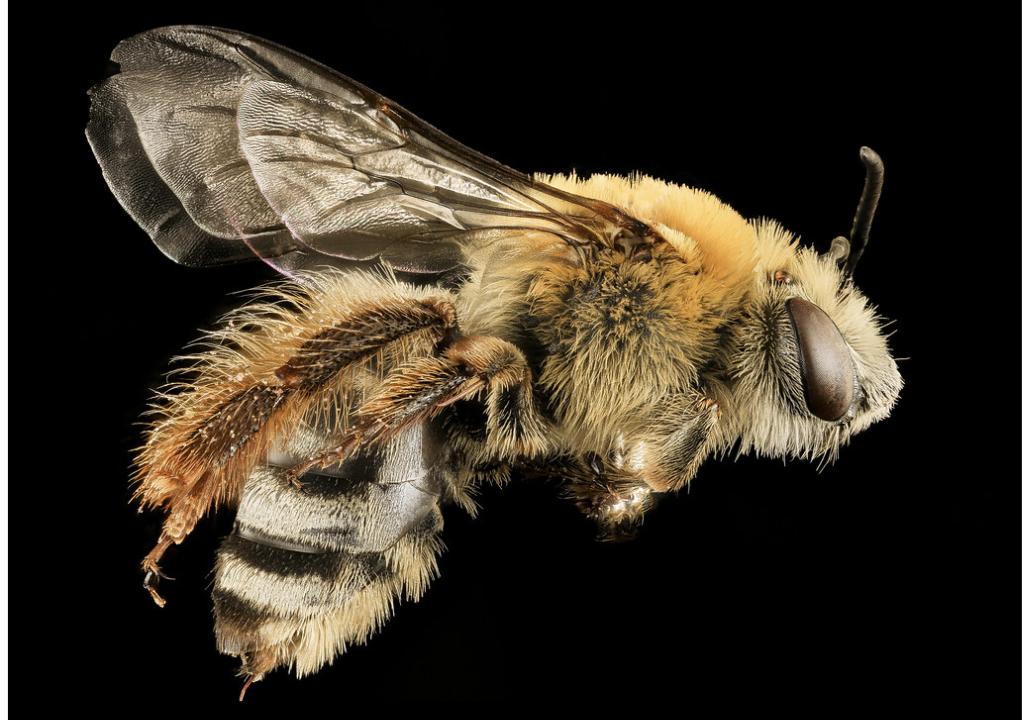

In mid-October, Avehi Singh, an alumnus of CFL spoke to the senior students about the fascinating evolution of bees and flowering plants and their interdependence. She also spoke about her research on olfaction in bees. The highlights of her talk are summarized as follows.
Avehi introduced us to the remarkable diversity of bees in terms of their shapes, sizes and colors. She went on to speak about how bees evolved from carnivorous wasps around 120 million years ago, and how many flowering plants also evolved around the same period. Although early bee species collected pollen from only a few plant species, eventually they evolved to acquire the same from many different plant species and became dietary generalists. This meant that bees and flowering plants began to evolve quickly and diversify together. Evolution of dietary generalism in bees is also responsible for the evolution of complex social behavioral that modern day bees exhibit.
The latter part of her talk was about the various signals through which bees find flowers. Both insects and plants have morphological features which enable them to locate each other in the wilderness! Plants also produce chemical signals to either attract or repel insects. Avehi’s research focused on chemical signaling, the mechanism of olfaction in bees, which responds to this chemical signaling, and the nature of genes involved in olfaction for generalist and specialist bees.
Through her studies on squash bees and how they respond to domesticated squash, she has found out that bees’ sensory systems can adapt to the changing traits of plants, to help them forage for the pollen they need. These changes happen at the level of their genes and also occur very rapidly (as compared to the evolutionary timeline). Thus, often the evolutionary history of insects have been profoundly shaped by agriculture. Learning about these sensory systems using our present day knowledge of genetics has also helped us understand how insects have become so successful.
Looking so closely at these creatures of everyday life enabled us to marvel at nature from a slightly different angle. Thank you, Avehi, for leaving us with so many things to reflect upon.